

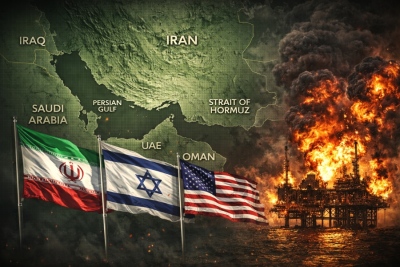
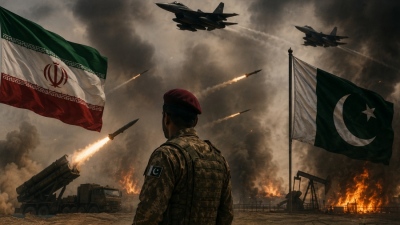
The confrontation between the United States and Iran is entering an even more dangerous phase, as Donald Trump dramatically escalates his rhetoric and now openly threatens critical Iranian infrastructure. Iran, however, is clear: if you strike Kuh Kolang, we will flatten Israel. At the core of this dispute lies the underground area of Kuh Kolang Gaz La, also known as Pickaxe Mountain, near the Natanz nuclear complex. Meanwhile, the US President warned that for every Iranian attack on a vessel in the Strait of Hormuz, the US could destroy an Iranian bridge or power generation plant. These statements spark fears that the conflict is shifting from targeted military strikes to a broader "infrastructure war," carrying unpredictable consequences for the civilian population, global energy security, and the entire world economy. The threat against bridges and power stations was confirmed by international media outlets, while Tehran warned of equivalent retaliatory measures.
The mysterious facility next to Natanz
Kuh-e Kolang Gaz La is a deeply buried tunnel complex currently under construction near the uranium enrichment facilities of Natanz. Its exact function has not been fully clarified. Western analyses argue that it could host activities related to advanced centrifuges or other sensitive nuclear operations. However, no public evidence has been presented showing that uranium enrichment is already taking place inside the installation.
The extreme depth of the tunnels beneath the surface makes the facility an exceptionally difficult target, even for heavy bunker-buster munitions. Experts estimate that it is situated approximately 100 meters under the mountain and that a conventional air strike might not be sufficient to achieve its complete destruction.
Threats lacking confirmed intelligence
The Iranian side accuses Donald Trump of using unverified intelligence as a pretext for military threats. Tehran's core argument is that Washington has not released documented evidence detailing what is taking place inside the mountain, yet continues to leave the possibility of a military strike open. According to the Iranian narrative, this proves that the threat is not merely a reaction to specific nuclear activity, but part of a wider strategy of psychological and political pressure.
"We will flatten Israel"
In an even more explosive message directed at Washington, Iranian sources claim that Tehran has warned that any US strike against Kuh Kolang, the underground facility near Natanz, could trigger an immediate and overwhelming response against Israel. The phrasing regarding "flattening" reflects the climate of extreme tension and the threat of a cascading conflict; however, it represents an Iranian claim rather than an independently verified military capability.
"A bridge or a power plant for every ship"
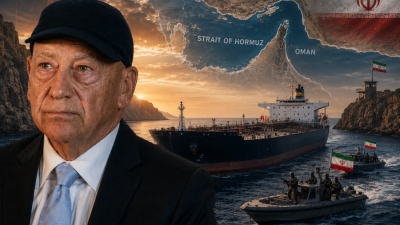
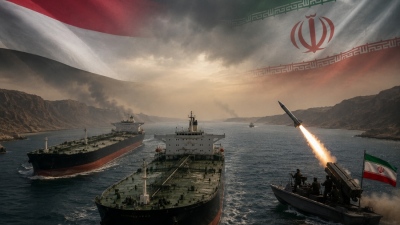
The most volatile statement from the US President concerns the Strait of Hormuz. Trump declared that every Iranian attack against a ship could result in the destruction of a bridge or an electrical power station in Iran, even those located near Tehran. This threat marks a significant shift in US military rhetoric. Until recently, Washington focused on protecting commercial shipping, targeting military assets, and restoring free passage through the strategic strait. Now, infrastructure serving the civilian population has entered the target list.
Fears of an infrastructure war
Targeting bridges, power plants, and other critical utility networks could entirely alter the nature of the regional conflict.
Such attacks can cause:
-
widespread power outages,
-
disruptions to water supply and telecommunications,
-
collapse of transportation networks,
-
severe impacts on hospitals and emergency services,
-
new waves of retaliation against US and allied infrastructure. Iran has already warned that it will follow a policy of proportional retaliation if the US carries out these threats.

The Strait of Hormuz at the center
The Strait of Hormuz represents one of the world's most vital energy arteries. Prolonged instability in the region has already raised transport costs, shipping insurance premiums, and global crude oil prices. Brent crude moved close to $96 per barrel as markets price in the risk of further regional supply disruptions. This means that even without a complete blockade of the Strait, the mere possibility of new attacks suffices to exert severe pressure on the global energy market.
The strategy of "coercive negotiation"
The Trump administration leaves open the possibility of talks while simultaneously intensifying military operations and threats.
This tactic relies on a combination of:
-
economic pressure,
-
targeted military strikes,
-
naval blockades,
-
threats against critical infrastructure,
-
and offering negotiations under US terms.
Washington seeks to convert its military dominance into political concessions. However, continued Iranian reactions and volatility in the Strait of Hormuz demonstrate that the pressure has not yet produced the outcome sought by the White House.
Tehran targets IAEA silence
Iranian media outlets accuse the International Atomic Energy Agency (IAEA) and European governments of applying double standards. Tehran argues that Western institutions closely monitor every Iranian nuclear move but fail to react with equal intensity when explicit threats are made against nuclear sites. This critique represents a specific Iranian policy stance rather than a neutral conclusion; nevertheless, it highlights a real issue: a military strike near a nuclear facility could create hazards extending well beyond Iran's borders.
One step away from generalized conflict?
Donald Trump's threats can be interpreted either as a deterrent effort or as preparation for a new military escalation. In either case, shifting focus from strictly military targets to bridges, energy grids, and underground nuclear complexes dramatically increases the risk of an uncontained war. An American strike on Iranian infrastructure could trigger retaliatory hits on energy installations in Gulf nations, US military bases, regional ports, and maritime shipping. In such a scenario, the crisis would no longer be confined to a bilateral confrontation between Washington and Tehran, threatening the economic stability and security of the entire region.
The underground secret fueling scenarios
The intense focus surrounding Kuh-e Kolang Gaz La (Pickaxe Mountain) stems not only from its location but primarily from what is believed to lie deep within it. Satellite images published in recent years show extensive underground tunnels and new construction near the Natanz nuclear complex, fueling extensive assessments in the West. Although no public evidence exists regarding what is housed inside, the deep secrecy surrounding the project has turned the mountain into one of the biggest enigmas of the Iranian nuclear program.
A bunker engineered to withstand almost anything
According to analyses by international experts, the underground facilities are reportedly constructed at a much greater depth than Iran's previously known nuclear sites, frustrating even state-of-the-art bunker-buster bombs. This structural resilience has earned it a reputation as one of the country's most heavily fortified strategic locations. For many analysts, the true mystery lies not only in what is inside the mountain, but whether any military power could neutralize it without causing uncontrolled regional fallout.
Why the mountain causes such high concern
The fact that Pickaxe Mountain regularly occupies center stage in international defense discussions has reinforced the intrigue surrounding it. Every new satellite photo, newly identified tunnel entrance, and public comment from US or Iranian officials raises fresh questions rather than providing answers. To date, no entity outside Iranian authorities knows with certainty what lies behind the mountain's reinforced blast doors. This very uncertainty turns the site into one of the world's most mysterious and contentious strategic locations.
www.bankingnews.gr


Σχόλια αναγνωστών